Choosing between a high-rise and a mid-rise condo in Downtown Austin sounds simple until you start weighing how you actually want to live. You may love the idea of skyline views and full-service amenities, or you may care more about easier daily routines and a quieter building feel. Either way, the right choice comes down to more than the number of floors. Let’s break down what really matters so you can compare Downtown Austin condos with confidence.
Downtown Austin Condo Basics
Downtown Austin is built for density, and that shapes the condo market in a big way. The area includes roughly 15,360 residents, 130,841 employees, and more than 10,300 residential units, all within a dense mixed-use core.
The City of Austin’s downtown planning framework supports a livable, multimodal urban center. That means both high-rise towers and mid-rise buildings have an important role, depending on the block, street frontage, and when the building was developed.
How building types evolved
City of Austin materials describe Downtown Austin’s condo stock as a mix of high-rise, mid-rise wrap or podium buildings, and garden-style walk-up product. Mid-rise buildings with elevators and structured parking began appearing in the early 2000s, while tower construction started with AMLI Downtown in 2004.
Since then, most new downtown projects that have been completed or planned have been high-rise towers. So if you are shopping newer inventory, you will likely see more tower options than mid-rise choices.
What High-Rise Usually Means
In Downtown Austin, a high-rise usually offers a more vertical living experience. That often includes more units, more shared systems, and a bigger amenity package, though the exact setup varies by building.
For many buyers, the appeal is easy to understand. You may get stronger skyline presence, broader views, and a more lock-and-leave lifestyle with professional building operations.
Potential upsides of high-rise condos
High-rises often fit buyers who prioritize:
- bigger views and a more iconic tower feel
- extensive shared amenities
- close access to downtown dining, nightlife, and transit
- a more managed, lock-and-leave lifestyle
Because more units sit above surrounding buildings, high-rises generally offer the best chance at skyline, Capitol, or Lady Bird Lake views. That is not guaranteed in every case, but building height can create a real advantage when it comes to light and sightlines.
Potential tradeoffs of high-rise condos
The biggest day-to-day factor is often elevator dependence. In a tower, groceries, guests, service calls, package runs, and move-ins all depend more heavily on elevator performance.
That does not mean high-rise living is inconvenient. It just means your experience is more tied to building operations, especially during maintenance events or temporary outages.
What Mid-Rise Usually Means
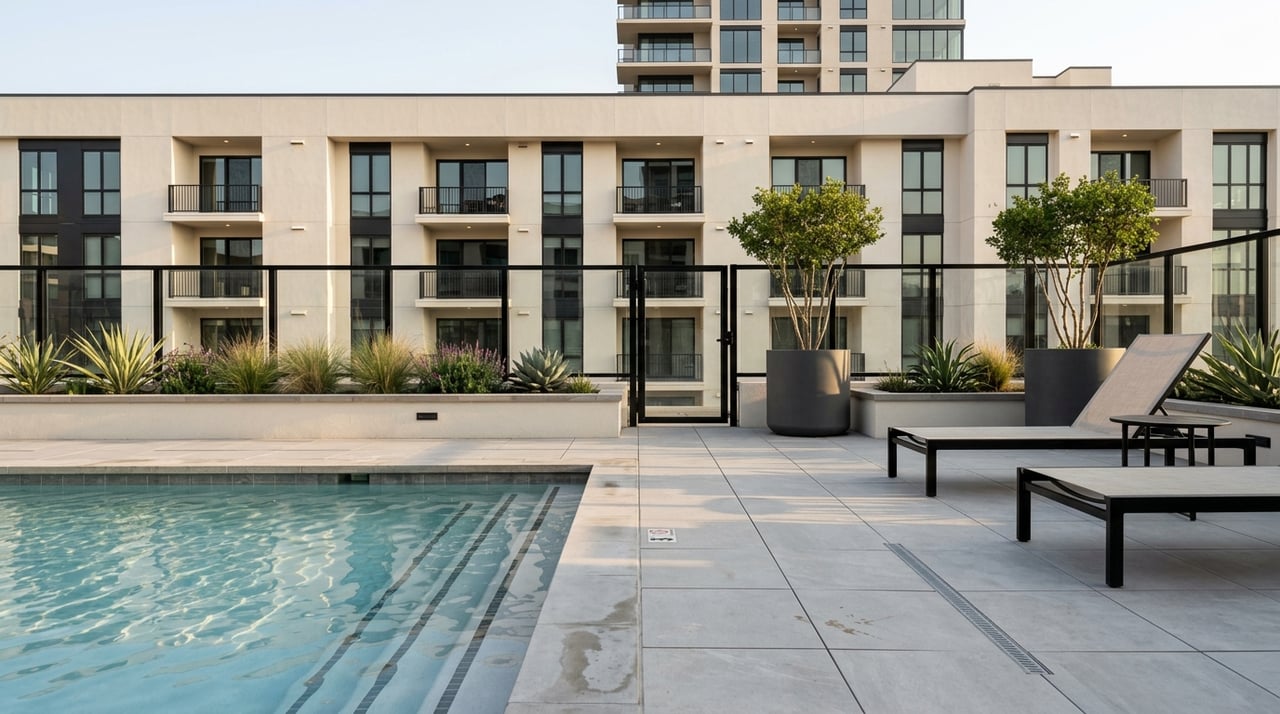
A mid-rise condo building often feels more scaled and more intimate. In Downtown Austin, mid-rise product commonly includes elevators and structured parking, but with fewer floors and a different circulation pattern than a tower.
For some buyers, that creates a more residential feel. The building may feel simpler to navigate, and your day-to-day routine may involve less vertical travel.
Potential upsides of mid-rise condos
Mid-rises often fit buyers who prioritize:
- a more intimate building experience
- easier vertical circulation
- less elevator dependence
- common areas that may feel quieter or less busy
- floorplans that feel more residential than iconic
If you want downtown living without the full tower environment, a mid-rise can be a strong middle ground. You may still get garage parking and elevator access, but in a setting that feels less intense.
Potential tradeoffs of mid-rise condos
The main tradeoff is often views. Mid-rises can absolutely have strong top-floor views, but fewer units will clear nearby structures in a dense downtown environment.
Amenities may also feel leaner in some mid-rise buildings. Since towers often have more units and shared systems, they may be better positioned to support larger amenity packages and more intensive operations.
Daily-Life Differences That Matter Most
When buyers compare high-rise versus mid-rise condos, the label can be helpful, but it is not enough. In practice, your experience will depend more on a handful of very specific factors.
Views and natural light
If views are high on your list, high-rises usually have the edge. More units sit above neighboring buildings, which can improve the odds of open skyline or lake-facing sightlines.
Mid-rises can still deliver attractive views, especially on upper floors. But in a dense downtown setting, your exact floor level and orientation matter more than the building category alone.
Noise exposure
Downtown Austin’s entertainment scene is part of what draws many buyers to the area, but it also affects livability. Lower-floor units near active nightlife and music corridors are generally more exposed to street and music noise.
Higher floors can reduce some street-level noise, but they are not fully insulated from event activity or construction. The City notes that noise complaints in several key entertainment and residential contexts route through 311, which reflects how block-by-block this issue can be.
Elevators and convenience
This is one of the most overlooked differences. In a mid-rise, fewer floors can mean quicker trips in and out, simpler move-ins, and less disruption when elevators are busy.
In a high-rise, elevators become a bigger part of daily life. If you travel often, host guests, or want low-friction routines, this is worth paying close attention to during showings.
Amenities and common areas
Buyers often assume a tower is automatically better because it looks more impressive from the outside. That is not always true.
A high-rise may offer more expansive amenities, but a mid-rise may feel more personal and easier to navigate. The better question is whether the building’s amenity package, staffing, maintenance, and common spaces actually match how you live.
Why HOA Review Matters in Any Downtown Condo
In Texas, condo purchases are document-driven, and that matters in Downtown Austin where building operations can vary widely. Height alone does not tell you whether a building is financially healthy or well managed.
That is why due diligence matters so much. Before closing, Texas Property Code Chapter 82 requires the selling owner to provide key association documents, including the declaration, bylaws, rules, and a current resale certificate.
What the resale certificate can tell you
The resale certificate is one of the most important documents in a condo transaction. Under Texas law, it includes details such as:
- the association’s operating budget
- periodic assessments
- unpaid common expenses or special assessments
- other unpaid fees
- approved capital expenditures for the next 12 months
- reserve information
- transfer restrictions or any right of first refusal
This is where you can spot issues that directly affect ownership costs and future resale. If a building has major upcoming projects or reserve concerns, that can matter more than whether it is a high-rise or a mid-rise.
Why HOA strength can shape resale
Texas condominium associations can adopt budgets, collect assessments, hire managers, and create rules that affect leasing, maintenance, use, sale, and occupancy. In practical terms, that means HOA quality is not just about monthly dues.
You also want to understand reserve funding, special-assessment risk, rental restrictions, and whether the building has large capital projects on the horizon. These details are especially important in larger, more system-heavy buildings, but they matter in every condo community.
Downtown Austin Market Conditions Favor Careful Comparison
If you are buying now, current market conditions may give you more room to compare options carefully. Downtown condo units averaged 123 days on market in 2024, which the Downtown Austin Alliance described as a shift to a buyer’s market.
That kind of market can create more negotiating room on condition or terms. It also gives you time to look past branding and focus on what actually drives long-term satisfaction and resale potential.
How to Choose the Right Fit
The best condo choice usually comes down to your lifestyle, not the marketing language. A high-rise may be the better fit if you want bigger views, more amenities, and a true tower experience in the center of downtown activity.
A mid-rise may be the better fit if you want a more intimate environment, easier day-to-day circulation, and a building that feels less vertical. Neither option is automatically better. The right one is the building that aligns with your routine, budget, and tolerance for tradeoffs.
A smart Downtown Austin condo checklist
As you compare specific properties, focus on these details:
- exact floor level
- unit orientation
- view corridor
- parking setup
- guest parking
- pet rules
- leasing rules
- reserve balance
- special-assessment history
- planned capital projects
- proximity to entertainment districts
- nearby active construction
These are the factors that often shape daily comfort and future resale timing. In Downtown Austin, building performance and block context usually matter more than the label on the listing.
If you want help narrowing the field, reviewing condo documents, or comparing downtown buildings side by side, Albert Allen can guide you through the search with a local, detail-focused approach.
FAQs
What is the main difference between a high-rise and mid-rise condo in Downtown Austin?
- In Downtown Austin, the difference is not just height. It often reflects different site footprints, parking setups, circulation patterns, amenity packages, and day-to-day living experiences.
Are high-rise condos in Downtown Austin always better for views?
- High-rises generally offer a better chance at skyline, Capitol, or Lady Bird Lake views because more units sit above nearby buildings, but the exact floor level and orientation still matter.
Are mid-rise condos in Downtown Austin quieter than high-rises?
- They can feel quieter in common areas and involve less elevator traffic, but actual noise exposure depends heavily on the unit’s floor level and proximity to nightlife, music corridors, traffic, and construction.
What condo documents should buyers review in Texas before closing?
- Texas law requires important association documents, including the declaration, bylaws, rules, and a current resale certificate, which can reveal assessments, reserve information, budget details, and approved capital expenditures.
Is Downtown Austin a buyer’s market for condos right now?
- Downtown condo units averaged 123 days on market in 2024, and the Downtown Austin Alliance described that as a shift toward a buyer’s market, giving buyers more time to compare buildings carefully.