
What should you ask before you sell your house in 2026?
Start with what you would walk away with, what waiting costs, and what happens if your Austin home sits. These 17 questions cover price, timing, repairs and your next move.
Key takeaways
- Price, presentation and exposure decide whether a home sells. You control all three before you list.
- Overpricing usually costs you. Austin-area homes sold for 92.2% of list price on average in October 2026.
- Most homeowners won't owe capital gains tax, but long-time owners in Austin should check the $250,000 and $500,000 limits.
- Winter sellers face less competition, and waiting has real monthly costs.
- Fix what buyers notice. Skip big remodels.
- Decide your next move (rent-back, contingency, buy first) before the sign goes up.
In October 2026, Google searches for "should I sell my house" reached the highest level on record (Google Trends, U.S. search interest). It is the question almost every homeowner asks first. It is also the hardest one to answer first.
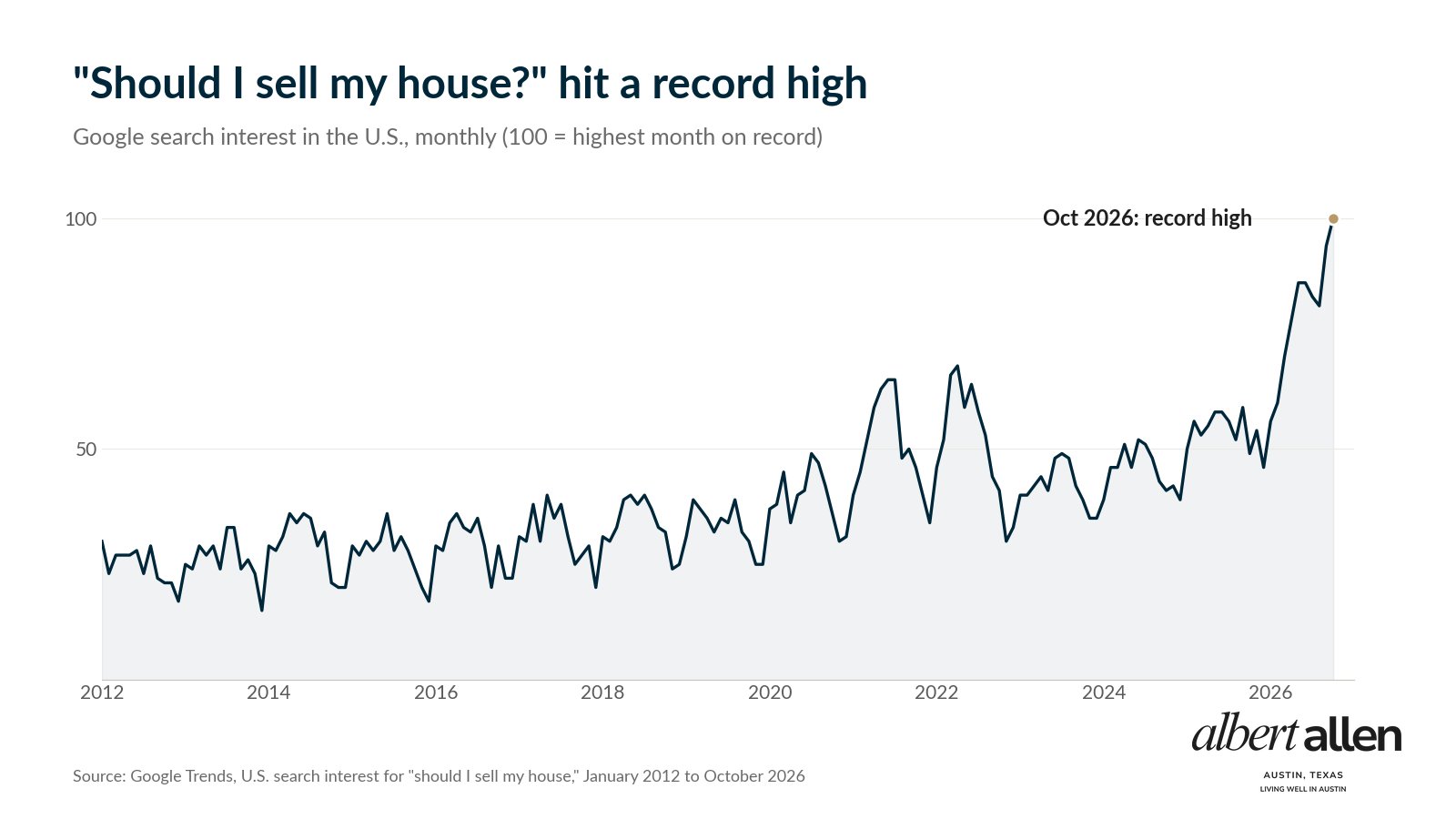
You can't answer it until you know what you would walk away with, what waiting really costs, and what happens if your house doesn't sell. Those are the 17 questions below, written for homeowners in Austin and across Central Texas, with the latest numbers where they help.
By Albert Allen, Luxury Real Estate Advisor | REALTOR® | Compass. Published November 2026.
Part 1: Price and Money
Most pricing mistakes aren't the ones sellers worry about.
1. What if my house doesn't sell?
It is one of the most common worries, and you're not alone. Searches for "can't sell house" also hit a record high this spring and stayed near that level all fall (Google Trends).
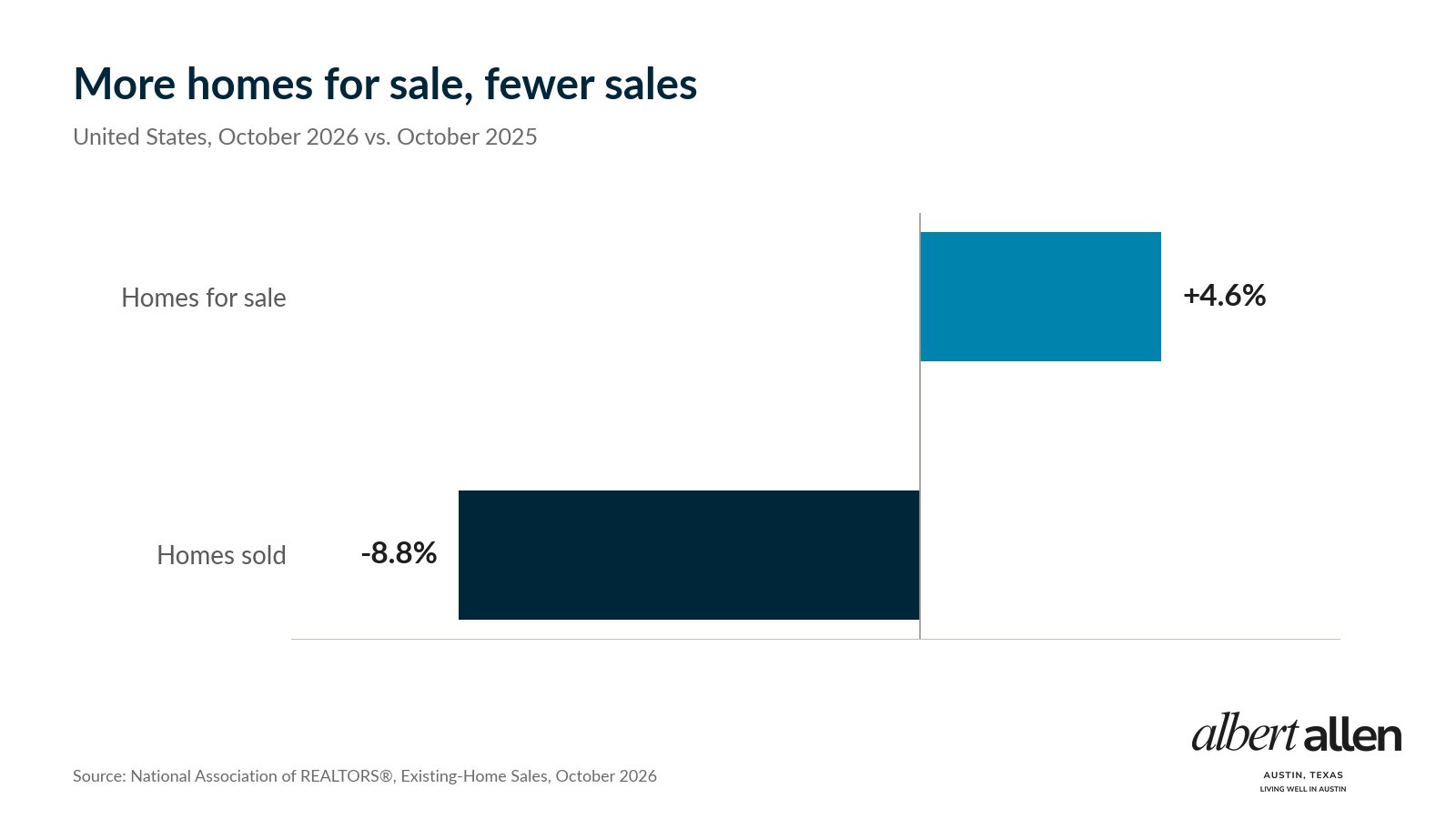
Part of it is the market. In October 2026, there were 1.59 million homes for sale across the country, up 4.6% from a year earlier, while sales were down 8.8% (National Association of REALTORS®, Existing-Home Sales). Buyers have more choices, so they take their time. Your home isn't only competing for a buyer's budget. It is competing with every other listing in that price range.
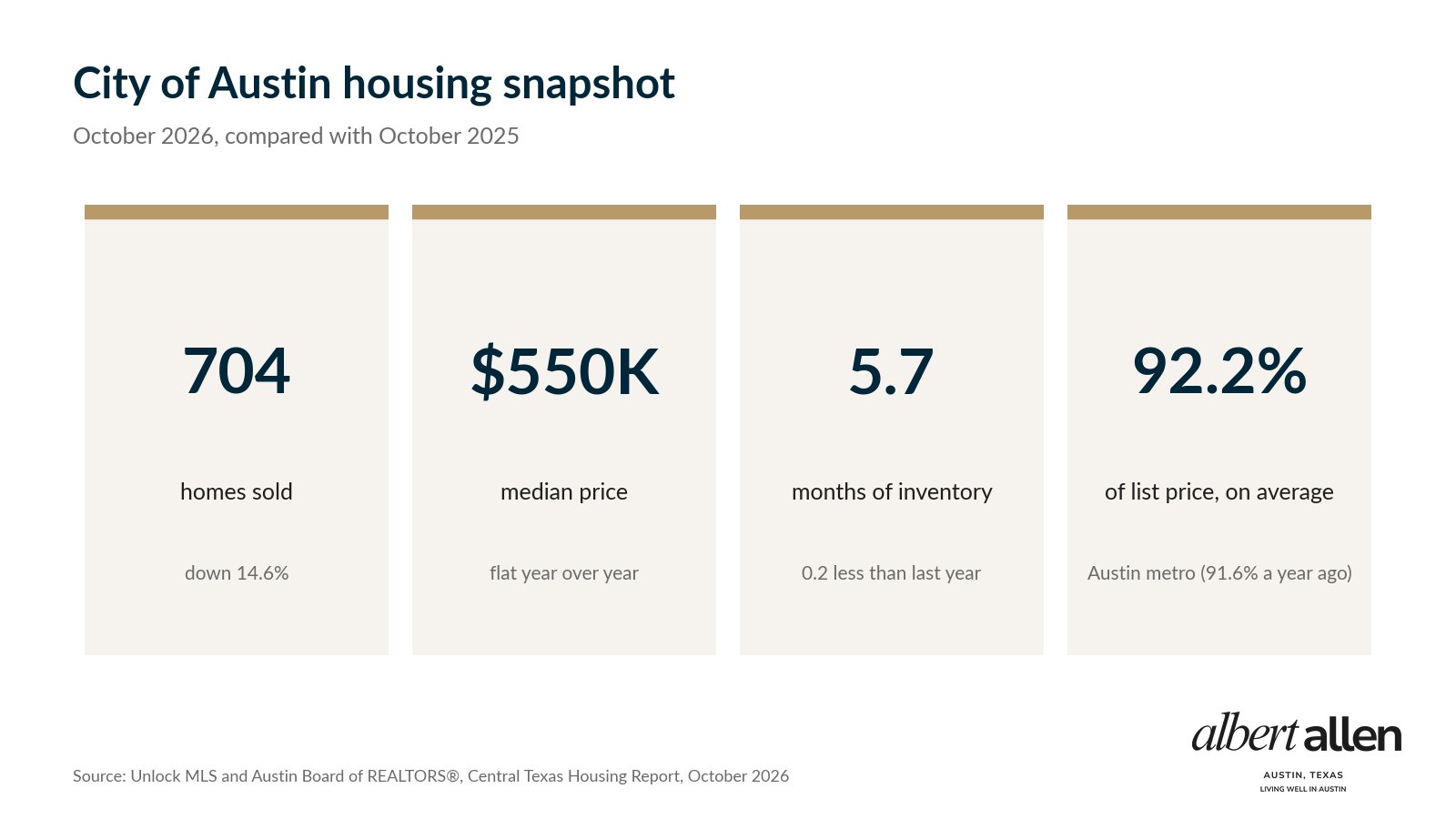
Austin shows the same pattern. In October 2026, 704 homes sold in the City of Austin, 14.6% fewer than a year earlier, while the median price held flat at $550,000 and the city had 5.7 months of inventory (Unlock MLS, Central Texas Housing Report). Across the Austin-Round Rock-San Marcos metro, sales fell 11.4% and the median price dipped 6.9% to $404,802. For the full local picture, see the Austin Housing Market Update: October 2026.
Most homes that don't sell share the same three problems: the price, how the home looks in photos and in person, and how many of the right buyers see it. You decide all three before the sign goes up. Get them right at the start, and your home is much less likely to sit.
2. Is it a mistake to start high and come down later?
Usually, yes. Buyers compare your home with everything else in their price range. If yours is priced too high, the other homes look like better deals. By the time you lower the price, the home has been on the market for a while, and buyers start to wonder what's wrong with it.
Here's the local reality check: in October 2026, Austin-area homes sold for an average of 92.2% of their list price (Unlock MLS). Buyers are negotiating, and an overpriced listing gives them even more room to do it.
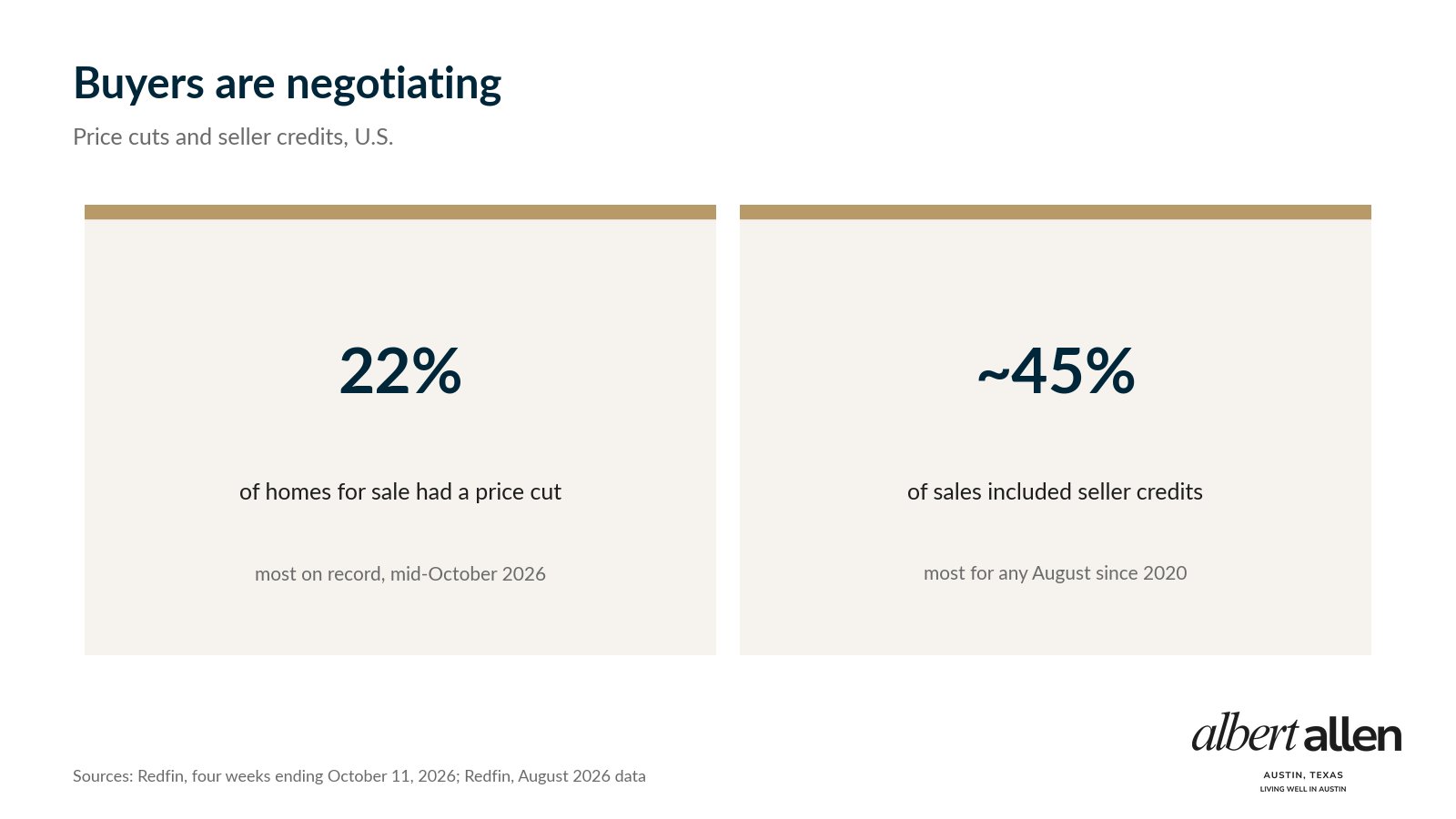
The national numbers say the same thing. Redfin reports that 22% of homes for sale had a price cut in the four weeks ending October 11, 2026, and nearly 45% of home sales in August 2026 included seller concessions, the highest share for any August since 2020.
Homes that start too high often sell for less in the end. A well-supported price on day one protects your negotiating position.
Albert's Take: I would rather price a home right and let buyers compete than chase the market down. The first two weeks are your best shot at a strong offer, so I build the price from the most recent nearby sales, not from what a neighbor listed at.
3. How much will I really walk away with?
Start with the price your home will likely sell for, not the list price. Then subtract:
- What you still owe on your mortgage
- Agent fees and closing costs
- Any money you give the buyer for repairs or costs
- Moving costs
That third item comes up in negotiations more often than most sellers expect. Nationally, close to half of recent sales included some kind of seller concession (Redfin). Before you list, Albert Allen can map out what you would walk away with at a few different prices, so the number at closing doesn't surprise you.
Seller Net Proceeds Estimator: Request a written net sheet from Albert
4. Will I owe capital gains tax when I sell?
Most people selling the home they live in won't. Some do, often because they have owned their home a long time in a place where prices went up a lot, and Austin is one of those places.
Under current federal rules, you can exclude up to $250,000 of profit if you're single, or $500,000 if you're married filing jointly. In most cases, you must have owned and lived in the home for two of the last five years (IRS Publication 523).
Those limits were set in 1997, when the typical U.S. home sold for about $145,000. This spring, it was about $410,000 (U.S. Census Bureau and HUD, median sales price of houses sold). The limits haven't moved. The National Association of REALTORS® estimates about a third of homeowners, roughly 29 million people, could already have more profit than the $250,000 single limit.
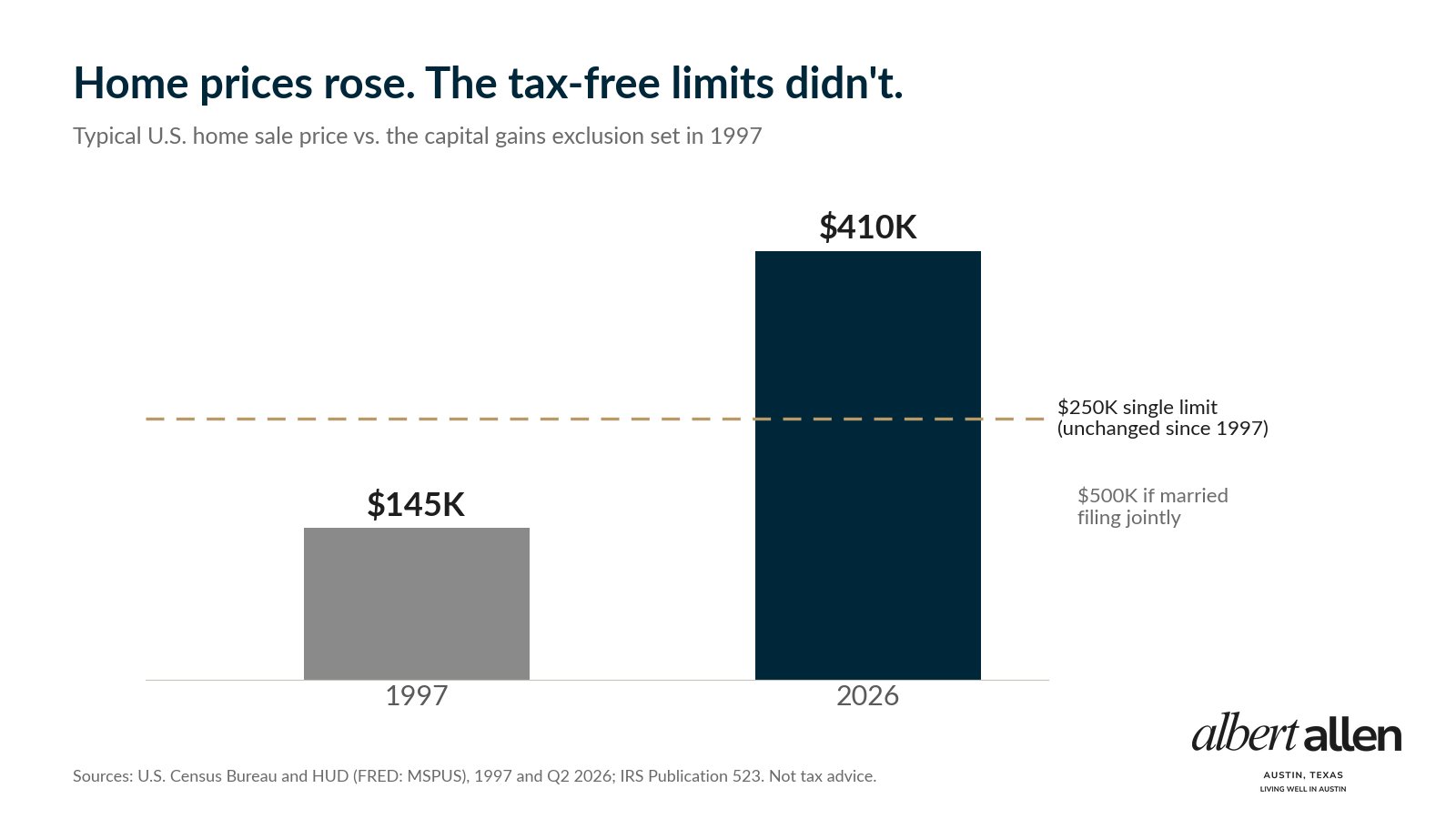
Some lawmakers want to raise or remove these limits, but no change has passed. If you've owned your home a long time, talk to a tax professional before you list, not after. This is general information, not tax advice.
Capital Gains Exclusion Check: Plan your sale with Albert
5. What's my house actually worth?
The best answer comes from what homes like yours, nearby, sold for in the last few months. Then you adjust for what makes your home different: condition, updates, layout, lot size, even the street.
Online estimates are a fine place to begin. But those tools work from public records and broad trends. They can't see the kitchen you redid, the roof you replaced, or the busy road two houses down, and the sales they use can be months old.
Online estimate | Agent's home value report | |
|---|---|---|
Public records | Yes | Yes |
Nearby sales | Often outdated | Most recent |
The kitchen you redid | Missed | Included |
The roof you replaced | Missed | Included |
The busy road nearby | Missed | Included |
That is why Albert Allen prepares careful home value reports for his clients, using the newest Austin sales and the local details online tools miss. Request your complimentary home valuation, or text Albert at 512-589-9776 with your address.
Albert's Take: Online estimates are a fine starting point, and I look at them too. But the details that move price in Austin, like a view lot, a renovated primary bath or a quiet street, don't show up in public records. That is why I walk the home before I give you a number.
Part 2: Timing
Here's what the calendar can and can't tell you.
6. Should I sell now, or wait?
The honest answer: sell when it fits your life and your finances, not when the market looks perfect. No one can predict the market, and waiting costs money too. Property taxes, insurance and upkeep keep adding up every month you hold the home, on top of your mortgage. Zillow and Thumbtack estimate those hidden costs of owning a home at about $1,380 a month, or roughly $45 a day.
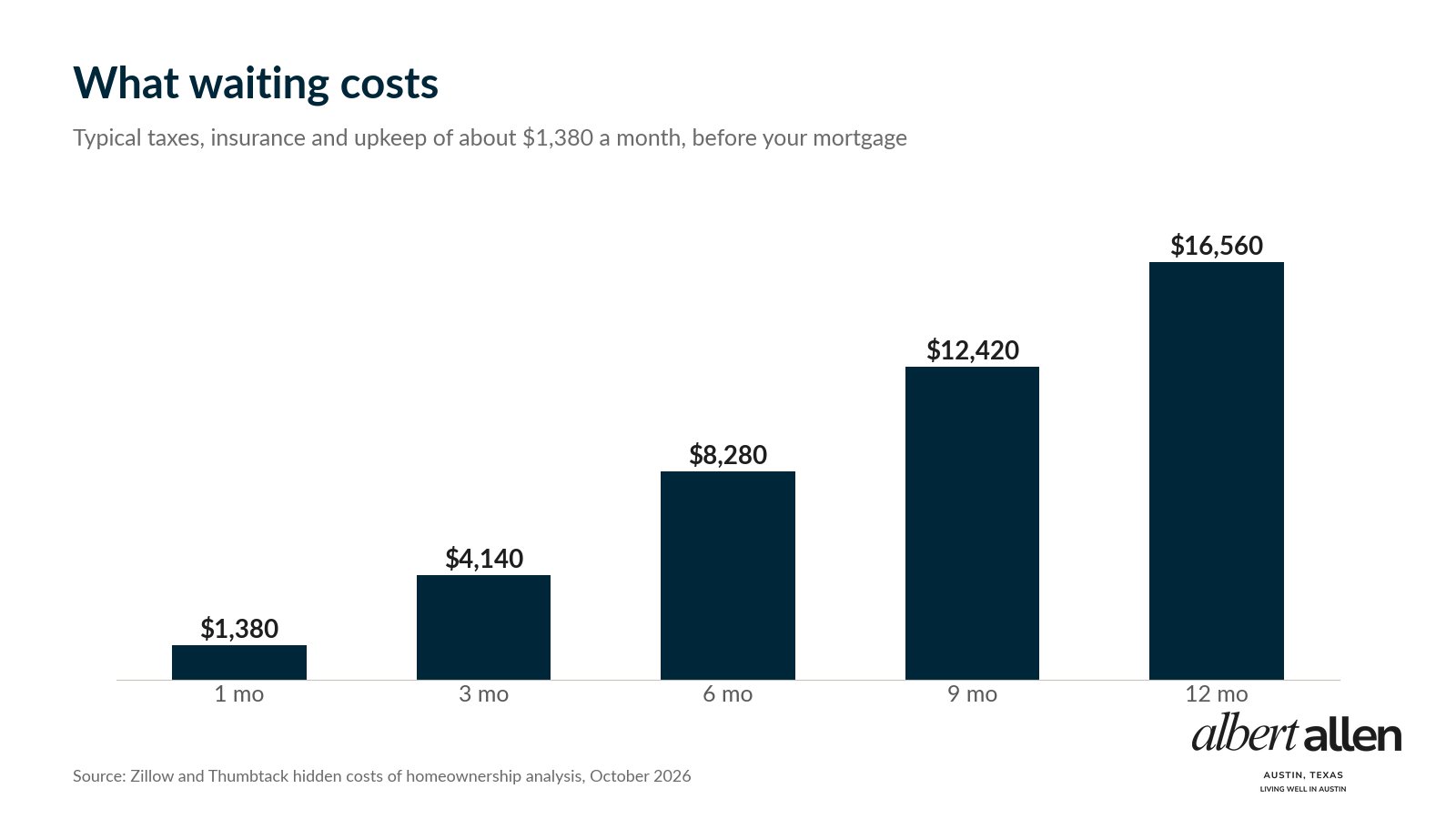
A better question: will your reasons for moving still be true in six months? If so, waiting just puts off your move.
Albert's Take: If your reasons to move are real, spend less energy guessing where rates go and more on getting the house ready. A well-prepared home listed in a slower month often does better than a rushed one listed in spring.
Cost of Waiting Calculator: See what your home is worth today
7. Will I lose money if I sell in the winter?
Not necessarily. ATTOM studied ten years of home sales (2015 to 2025) and found that homes sold in December, January and February earned more over their expected value than homes sold from July through November.
Spring is still usually the strongest season. But there are fewer homes for sale in winter, so you have less competition.
8. How long will my house take to sell?
A lot of people are asking. Searches for "how long does it take to sell a house" hit a record high in September 2026 (Google Trends).
It depends on your price and your neighborhood. The best guide is how fast homes like yours are selling right now in your part of Austin. What matters most is the first couple of weeks, when a new listing gets the most attention. If buyers aren't showing interest early, something needs to change.
9. Once I accept an offer, how long until it's done?
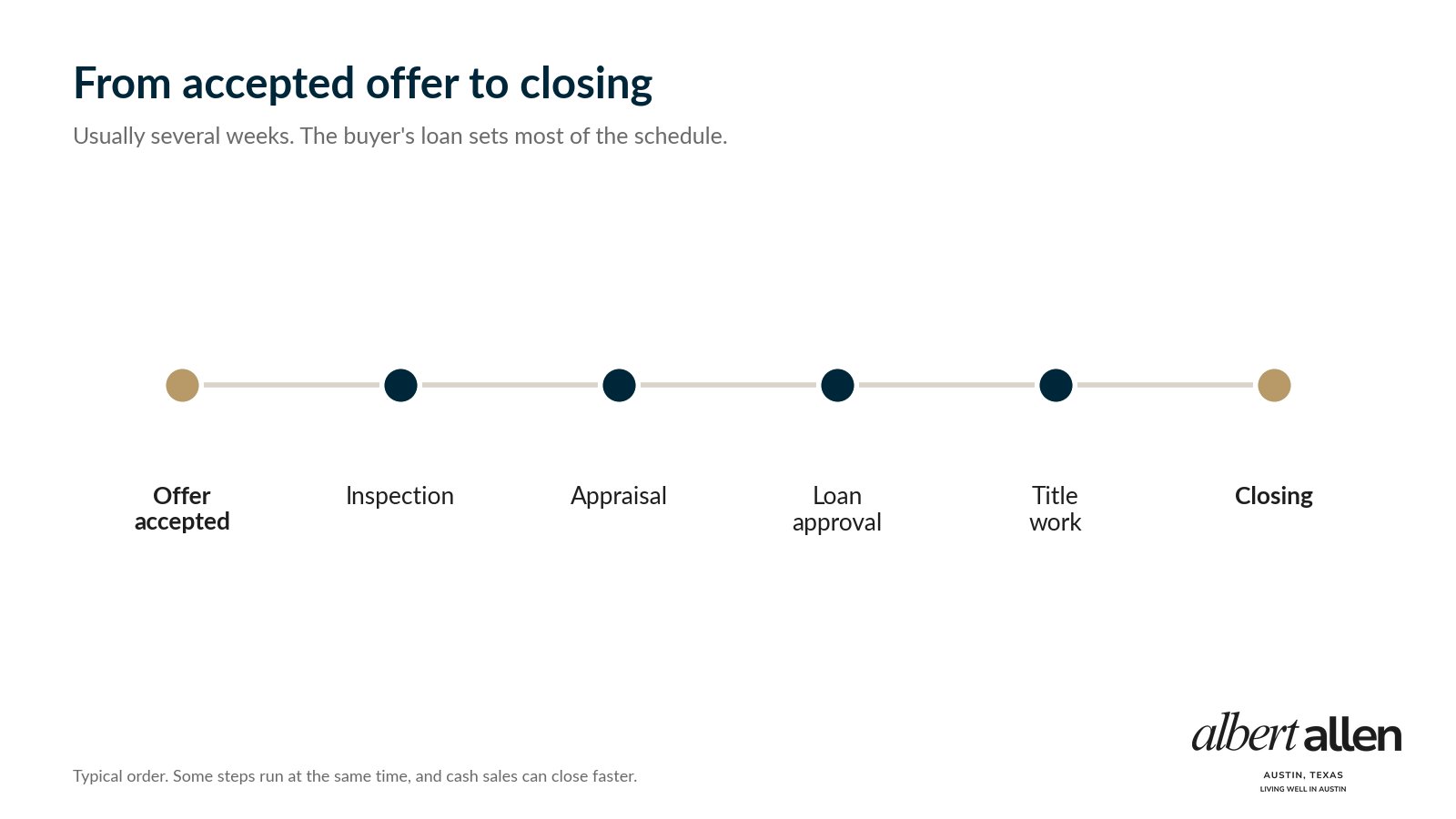
Usually several weeks. The buyer's loan sets most of the schedule, and cash sales can close faster. During that time there is an inspection, an appraisal (the lender's check on the home's value), loan approval, and title work.
You can help keep things on time. Have your disclosure forms, permits and repair records ready before you list, then answer requests quickly.
Part 3: Repairs
Some fixes pay you back. Most don't.
10. Should I fix it up, or sell it as is?
Usually, somewhere in between.
Selling as is saves time and money now. But buyers estimate what the work will cost, often too high, and take that off their offer. A full remodel is a bet: you pay now and hope buyers love it as much as you do.
The middle path is fixing what buyers will notice in the photos, on a tour, and in the inspection report. An inspection before you list tells you what a buyer's inspector will find, before a buyer does. That matters: in a June 2026 HomeLight survey of lenders, problems with the home itself derailed more deals than loan problems did. Here's what to expect from a home inspection in Texas. Through Compass Concierge, eligible sellers can also cover approved pre-listing improvements with no upfront cost.
Selling as is doesn't change what you have to tell buyers. In Texas, sellers of most homes complete a Seller's Disclosure Notice describing known conditions. It protects everyone.
11. Which repairs are a waste of money?
Big projects buyers will likely redo in their own style, like a full kitchen or bathroom remodel, rarely pay you back. The same goes for replacing older lights, faucets and appliances that still work.
Spend on safety, things that work, and first impressions instead. Fix leaks, broken systems, worn floors in main rooms, and anything an inspector will likely point out.
12. Is staging worth the money?
It depends on the room. The basics cost very little: clear the clutter, clean, put away family photos, and let in as much light as you can. Full staging, with furniture and decor brought in, helps most in empty or dated rooms where buyers have a hard time picturing the space. It matters most in photos, because that is where most buyers see your home first.
Albert's Take: Most of the staging wins I see cost almost nothing: less furniture, more light and a clean, neutral look. I save full staging for empty or dated rooms where buyers need help seeing the space.
Part 4: Your Next Move
Sell, rent, or stay put? Each one has a cost.
13. What if it sells and I have nowhere to go?
This worry stops many people from selling at all. In a December 2025 HomeLight survey of agents, having nowhere to go ranked as sellers' second-biggest fear. You have more options than you might think:
- A closing date that gives you time to move
- A rent-back, where you stay in the home for a set time after it sells
- An offer on your next home that only goes through if yours sells
- Loan programs that let you buy before you sell
The right one depends on your finances and the local market. The key is to decide the order before you list.
14. Do I have to sell before I can buy?
Not always. You can make your offer on the next home contingent on yours selling, sell first and rent your home back for a while, or use a loan that lets you buy first. Each option moves the risk around. None of them removes it, so talk to a lender early and know what you would do if the timing slips.
If your next home is new construction, build timelines change the math. It helps to know the difference between custom, semi-custom and spec homes in Austin before you set a closing date on the home you have now.
15. Should I rent it out instead of selling?
More homeowners are asking. Searches for "rent or sell house" hit a record high in September 2026, the highest level in Google's records back to 2004 (Google Trends).
Renting can make sense if your mortgage rate is low, the rent covers your costs, and you're ready to be a landlord. That means repairs, empty months, tenant laws, insurance and different tax rules. Renting out a home that didn't sell is not the same as choosing to invest. Run the numbers both ways before you decide.
16. Is it worth giving up my low mortgage rate?
It is a real cost. If your rate is much lower than today's, your next loan will likely cost more each month, even on a similar home.
But your rate is only part of the decision. Staying has costs too: a long commute, a home you've outgrown, living far from family. Those don't show up on a bill. Compare the extra monthly cost with what staying costs you in other ways.
Part 5: Your Agent
17. How do I know if my agent has a real plan?
A real plan answers these questions before your home is listed:
- What price, and which recent sales support it
- What to fix, and what to leave
- How buyers will find your home, including whether a Compass private listing phase makes sense first
- What happens at three weeks if it isn't working
If the plan is "list it and see," it's not a plan yet. The question most sellers skip is the last one: what happens at three weeks if it isn't working. Ask it before you sign anything.
Albert's Take: Here's how I handle it: if a listing isn't getting showings and second visits by week three, we sit down and change something, whether that's price, photos or exposure. You should know that plan before the sign goes up.
Frequently Asked Questions
Is now a good time to sell a house in Austin?
It depends on your goals more than the calendar. With more homes for sale nationally and buyers taking their time, pricing and presentation matter more than timing. A current home value report for your Austin neighborhood is the best starting point.
How much does it cost to sell a house?
Plan for agent fees and closing costs, any buyer credits you negotiate, and moving costs, then subtract what you owe on your mortgage. Your net number depends on your price and terms, so ask for a written net sheet at a few different prices before you list.
Do I need to make repairs before selling in Texas?
No, you can sell as is, but you still disclose known conditions on the Texas Seller's Disclosure Notice. Fixing safety items, broken systems and first-impression issues usually pays off more than a full remodel.
Feeling Stuck on a Decision?
If one of these questions is on your mind, Albert Allen is happy to walk through your situation with you. No pressure, and no obligation to list. For a step-by-step overview, start with the Seller's Guide, or browse Austin neighborhood guides to see how your area compares.
Looking to Sell?
What is your Austin home worth?
I’ll prepare a complimentary home valuation based on recent nearby sales and the details buyers pay for in your area: lot, layout, updates and condition. Prefer to talk it through first? Schedule a Walk & Talk.
Albert Allen | Luxury Real Estate Advisor | REALTOR® | Compass
512-589-9776 | [email protected] | LivingWellinAustin.com
Austin Native. Private Access. Trusted Luxury.
Sources: Google Trends, U.S. search interest (retrieved November 2026); National Association of REALTORS®, Existing-Home Sales, October 2026, and "The Capital Gains Cliff Is Coming"; IRS Publication 523, Selling Your Home; U.S. Census Bureau and HUD, Median Sales Price of Houses Sold (1997 and Q2 2026); ATTOM, 2026 Best Days to Sell a Home (sales 2015 to 2025); Unlock MLS and Austin Board of REALTORS®, Central Texas Housing Report, October 2026; Redfin, price cuts (four weeks ending October 11, 2026) and seller concessions (August 2026); Zillow and Thumbtack, hidden costs of homeownership; HomeLight, lender survey (June 2026) and agent survey (December 2025). General information only, not legal or tax advice.